ADP Workforce Now Benefits Administration: Limitations and How to Extend It
ADP runs payroll beautifully. Benefits administration is where mid-market teams hit the wall — here's exactly where, and how to extend it without migrating payroll.
Last updated
ADP Workforce Now is a great payroll system — that part isn't in question. Where it starts to creak is the bundled benefits module, once you're juggling multiple carriers, class-based eligibility, or a broker in the mix. The good news: you can close every one of those gaps without touching ADP payroll.
The short version
- ADP is excellent at payroll and core HR; the bundled benefits module is where complex mid-market programs run out of room.
- The core gap: the benefits module and ADP payroll don't sync on their own, so deductions and elections get rekeyed by hand.
- That manual gap runs a 200-employee group $5,000–$15,000 a year, on top of ACA and COBRA exposure.
- The fix is to layer benefits administration on ADP through the certified Marketplace API — no payroll migration.
What ADP Workforce Now Does Well
Let's give ADP its due before we talk about where it strains. Workforce Now was built as a payroll engine first, and that's exactly where its depth lives — wage calculation, multi-state tax filing, garnishments, time and attendance, and core employee records at a level most mid-market employers never outgrow. If your benefits program is simple (one or two carriers, standard eligibility, a single EIN), the bundled benefits module is usually plenty, and bolting on a second platform would just be cost for cost's sake.
Why the limits below aren't a knock on ADP payroll
Nothing below is a criticism of ADP as payroll. The strain shows up only when your benefits program gets more complicated than the bundled module was built for: more carriers, voluntary and ancillary lines, tiered eligibility, multiple EINs, or a broker who needs configuration control. ADP knows this — its certified Marketplace exists precisely so specialized platforms can extend Workforce Now where a bundled suite reaches its edge. Keeping ADP as your payroll system of record and layering benefits admin on top is a supported, common setup, not a hack.
The Benefits Module Is Configured For You, Not By You
The first wall most teams hit is configuration control. On ADP Workforce Now, the benefits module is set up largely by ADP during implementation rather than by you or your broker on an ongoing basis — so the plan rules, eligibility tiers, contribution strategies, and open-enrollment logic that shift year to year often mean filing an ADP service request or moving up a service tier instead of just changing a setting yourself. If you run waiting periods that vary by class, age-banded voluntary products, or contribution formulas tied to salary or hours, you'll feel the bundled rule engine's edges fast.
Where it bites hardest: open enrollment
Open enrollment is where it really adds up. A dedicated benefits platform lets you model plan changes, test the eligibility logic, and stand up a guided enrollment experience before the window opens. On the bundled module, open enrollment tends to look more like a configuration handoff to ADP plus manual cleanup once the January elections land. The cost rarely shows up as one line item — it's the reconciliation hours your team eats absorbing the gap, usually 4 to 8 hours per 100 employees per month, bunched hard around that January effective date.
Carriers Are Narrow, and the Payroll Handoff Is Manual
Two things send teams looking beyond ADP's bundled benefits admin: the carriers and the handoff to payroll. The carrier library is narrower than what dedicated benefits platforms keep wired up, so adding a voluntary or ancillary line — or switching carriers — tends to take longer and give you fewer options than you'd expect.
How the ADP API integration closes the gap
This is the part Insynctive is built for. A real-time, bi-directional API integration with ADP Workforce Now — through the certified ADP Marketplace — keeps elections and deductions flowing automatically instead of being rekeyed pay period after pay period. The reconciliation gap that drives those errors simply stops existing. It's the same payroll-benefits gap we break down in the payroll-benefits sync analysis.
Compliance Gaps Turn Into Real Money
This is where limitations stop being a labor problem and start being a money problem. ACA 1095-C generation in ADP Workforce Now keys off accurate eligibility and offer-of-coverage data — and when that data lives partly in the benefits module and partly in spreadsheets, year-end hands you filing corrections. Each incorrect 1095-C carries up to $290 in penalty exposure, and an Applicable Large Employer that misclassifies coverage offers is looking at $2,900 per full-time employee in 4980H exposure. That's not a rounding error.
COBRA timing and multi-state exposure
COBRA timing is the next one to watch. A termination in payroll has to trigger a COBRA notice inside a 14-day window, and when offboarding depends on a manual handoff between your payroll team and your benefits team, late notices run $110 per day per affected person. Multi-state and multi-EIN employers stack a third layer on top: eligibility, plan availability, and state leave laws all vary by location, and reconciling them across the bundled module and payroll is manual work that compounds with every new state you add. A dedicated benefits layer ties all of this to system triggers instead of someone remembering to do it.
The Limitations at a Glance
Here's where ADP Workforce Now's bundled benefits admin reaches its edge for mid-market employers — and how a layered benefits platform extends each one.
| Limitation | Where It Shows Up | Typical Annual Cost / Exposure | How Insynctive Extends It |
|---|---|---|---|
| Self-service plan and eligibility configuration | Annual open enrollment, mid-year plan changes, class-based eligibility | 4-8 hrs/100 employees/month reconciliation labor | Admin-configurable rule engine for eligibility, contributions, and waiting periods |
| Carrier feed depth and setup | Adding voluntary/ancillary carriers, carrier switches | Multi-week lead times + per-feed setup fees | Managed carrier integrations through the carrier feed layer |
| Deductions out of sync between payroll and benefits | Per-pay-period reconciliation | $5,000-$15,000/yr in deduction errors (200-employee group) | Real-time bi-directional API sync with ADP Workforce Now via the certified Marketplace integration |
| ACA reporting accuracy | Year-end 1095-C filing | $290 per incorrect 1095-C; $2,900/FTE 4980H exposure | Eligibility and offer-of-coverage tracking tied to ADP hire/term events |
| COBRA notice timing | Offboarding handoff between payroll and benefits | $110/day per missed notice | Termination-event-triggered COBRA notice generation |
| Decision support / guided enrollment | Open enrollment, new-hire enrollment | Lower election confidence, higher support volume | Guided enrollment experience layered on ADP-sourced employee data |
See how Insynctive layers benefits administration on ADP Workforce Now through the certified Marketplace integration — no payroll migration.
View the ADP IntegrationExtend ADP, Don't Replace It
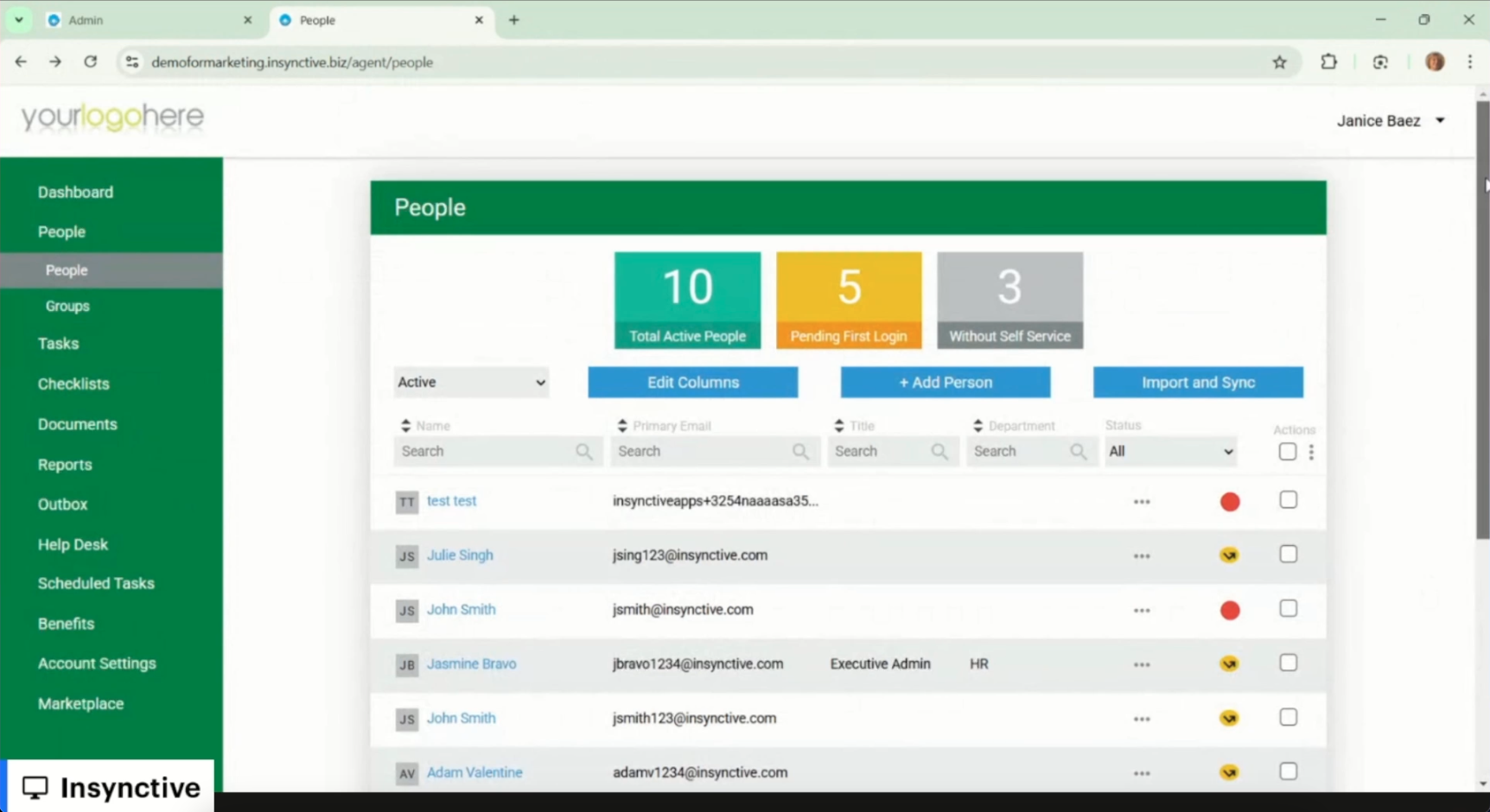
For most mid-market employers, the move is simple: keep ADP Workforce Now as your payroll system of record and layer benefits administration on top through the certified ADP Marketplace integration. You don't migrate payroll. Insynctive is a published ADP Marketplace partner, so the connection runs on ADP's certified API and OAuth flow instead of a custom file feed — and it's bi-directional. Employee data and hire/termination events flow from ADP into Insynctive; benefits elections and per-pay-period deductions flow back to ADP before the pay-run cutoff.
What you keep, and what you gain
That's what makes every limitation above fixable without disrupting anything. Your ADP wage calculation, tax filing, and core records stay exactly as they are, and you gain a configurable benefits layer that owns eligibility logic, carrier feeds, ACA tracking, COBRA timing, and guided enrollment. The platform supports whatever benefits strategy you already run — it doesn't hand you a new one and make you live with it. If you want to see how the connection actually works, the ADP Workforce Now integration page walks through the architecture, the sync model, and the four-to-six-week implementation timeline.
Frequently Asked Questions
Does ADP Workforce Now include benefits administration?
Yes — Workforce Now ships with a bundled benefits administration module, and for employers with simple programs (one or two carriers, standard eligibility, a single EIN) it's usually plenty. The limits show up as your benefits get more complex: multiple carriers, voluntary and ancillary lines, class-based eligibility, multiple EINs, or a need to configure things yourself. That's the point where many mid-market teams extend the module rather than replace ADP payroll.
What are the main limitations of ADP Workforce Now benefits administration?
The ones teams hit most: limited self-service control over plan rules and eligibility, narrower carrier-feed depth with per-feed setup fees and multi-week lead times, a manual handoff between the payroll module and benefits that drives reconciliation errors, thinner decision support during enrollment, and manual reconciliation for ACA and multi-state compliance. None of these touch ADP's payroll engine, which stays a strong system of record.
Can I keep ADP payroll and add a separate benefits platform?
Yes, and it's the most common path for employers who've outgrown the bundled module. ADP Workforce Now stays the system of record for payroll, tax filing, and core employee data, and a benefits platform layers on top through the ADP Marketplace integration. Insynctive is a certified ADP Marketplace partner, so the connection is bi-directional and API-based — no payroll migration.
How much do ADP Workforce Now benefits limitations actually cost?
Mostly in reconciliation hours and compliance exposure rather than one obvious line item. A 200-employee group typically absorbs 4-8 hours per 100 employees per month reconciling, finds $5,000-$15,000 a year in deduction errors, and carries exposure of $290 per incorrect 1095-C, $2,900 per full-time employee in ACA 4980H exposure, and $110 a day for late COBRA notices. It all concentrates around open enrollment and year-end.
Does adding a benefits platform disrupt my ADP setup?
No. Because Insynctive connects through the certified ADP Marketplace rather than a custom build, your ADP payroll, tax filing, and core records don't change. Employee data flows from ADP into the benefits layer, and benefits deductions flow back to ADP before the pay-run cutoff. Most mid-market employers go live within four to six weeks without changing how payroll runs.
Want to see Insynctive in action?
Drop a few details and our team will reach out to talk through your setup, your stack, and where Insynctive fits. No high-pressure pitch — just a real conversation.